
- Edible insects guide – Why eat insects?
- What insects are edible?
- Is it safe to eat insects?
- Nutritional Profiles of Popular Species
- Crickets vs. Mealworms vs Locusts: Which is better?
- What do edible crickets taste like?
- What do edible mealworms taste like?
- What do edible locusts taste like?
- How do you cook edible insects?
- Beginner-friendly ways to try insects
- Where to buy edible insects in the UK?
- FAQ
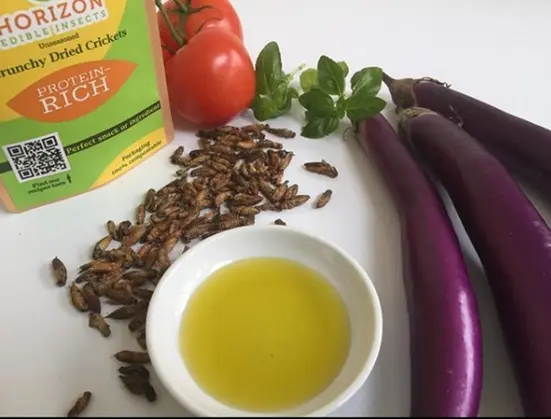
Edible insects guide – Why eat insects?
The Sustainability Powerhouse
Choosing edible insects is one of the most impactful ways to reduce your environmental footprint. As the global population grows, traditional livestock farming becomes increasingly unsustainable due to land and water scarcity.[1]
- Superior Feed Conversion: Crickets require 12 times less feed than cattle to produce the same amount of protein.
- Water Conservation: Producing 1kg of beef requires roughly 15,000 litres of water; the same amount of insect protein requires less than a fraction of that.
- Reduced Greenhouse Gases: Edible insect farming produces up to 100 times fewer greenhouse gases than raising pigs or cattle.
Unmatched Nutritional Density
Insects are often referred to as “superfoods,” and for good reason. They aren’t just a protein alternative; they are a complete nutritional package.
- Complete Protein: Unlike many plant-based proteins, insects contain all nine essential amino acids.
- Vitamin B12 & Iron: Essential for energy levels and brain function, insects (especially crickets) often provide more iron than spinach and more B12 than salmon.
- Prebiotic Fiber: Insects contain chitin, a unique type of fiber that supports a healthy gut microbiome and reduces inflammation.
The Future of Food Security
In the UK, the shift toward sustainable protein is supported by the Food Standards Agency (FSA). By incorporating insects into your diet—whether through whole roasted snacks or versatile cricket flour—you are supporting a circular economy that prioritizes the planet without sacrificing nutritional quality
What insects are edible?
In the UK, not all insects are approved for human consumption. The Food Standards Agency (FSA) regulates edible insects as novel foods, meaning only species that meet safety standards can legally be sold for eating.
If you’re curious to try edible bugs yourself, you can explore our range of dried crickets, mealworms, and insect snack mixes in our edible insects shop.

In addition, UK-allowed species include:
- Yellow Mealworm (Tenebrio molitor) – commonly eaten as snacks, added to protein powders, and used cooking.
- Crickets (Acheta domesticus) – dried crickets are widely enjoyed in protein bars and roasted snacks.
- Locusts (Locusta migratoria) – often used in Asian-style recipes.
For the current legal status concerning the progress of novel food authorizations in the UK, please refer to our blog. You can also consult the Food Standards Agency (FSA) novel foods list.
⚠️ Important: Avoid wild insects or those sold for pet feed; these are not farmed to human food standards and may carry harmful bacteria or pesticides.
Is it safe to eat insects?
Yes, eating insects is safe when they are farmed and processed according to FSA rules. Here’s what you need to know:
- Only novel-food-approved insects are allowed for human consumption.
- Edible insects must be raised under hygienic conditions, fed safe diets, and processed properly (dried, roasted, or powdered).
- Always check packaging for “food-grade” or human consumption labels.
Safety tips:
People with shellfish, crustacean, mollusk or dust-mite allergies should avoid eating insects.
Nutritional Profiles of Popular Species
Edible crickets nutritional content
Edible crickets are more than just a novelty — they’re a genuine superfood of great nutritional value. Made by dehydrating Acheta Domesticus crickets, these golden, crunchy insects are rich in nutrients that support a balanced and sustainable diet. In fact, dried crickets are packed with complete protein, essential amino acids, healthy unsaturated fats, and key minerals like iron, zinc, and potassium.
Even better, edible crickets contain vitamin B12, a vital nutrient that’s often hard to obtain from plant-based foods alone. With a mild, nutty flavor and light, crispy texture, they’re ideal for health-conscious eaters, eco-minded consumers, and anyone looking to reduce their reliance on traditional animal products.
Edible crickets Nutritional Information (Per 100g)
| Analysis | Unit | Value |
|---|---|---|
| Protein (N×6.25) | g/100g | 64.3 ± 1.5 |
| Dietary fiber | g/100g | 0.9 ± 0.1 |
| Total sugars after inversion | g/100g | 0.8 ± 0.1 |
| Ash | g/100g | 3.7 ± 0.1 |
| Fat | g/100g | 17.7 ± 1.6 |
| Energy value | kcal/100g | 431 |
| Energy value | kJ/100g | 1806 |
| Carbohydrates | g/100g | <0.2 |
| Moisture | % | 7.4 ± 0.5 |
| Total saturated fatty acids (SAFA) | g/100g | 2.7 ± 0.3 |
| Sodium | mg/100g | 327 ± 10 |
| Sodium chloride (NaCl) | g/100g | 0.82 ± 0.03 |
| Vitamin A (retinol) | µg/100g | 47.5 ± 7.1 |
| Vitamin D₃ (cholecalciferol) | µg/100g | 0.82 ± 0.08* |
| Vitamin B₁₂ (cyanocobalamin) | µg/100g | 15.8 ± 3.2* |
Edible Mealworms nutritional content
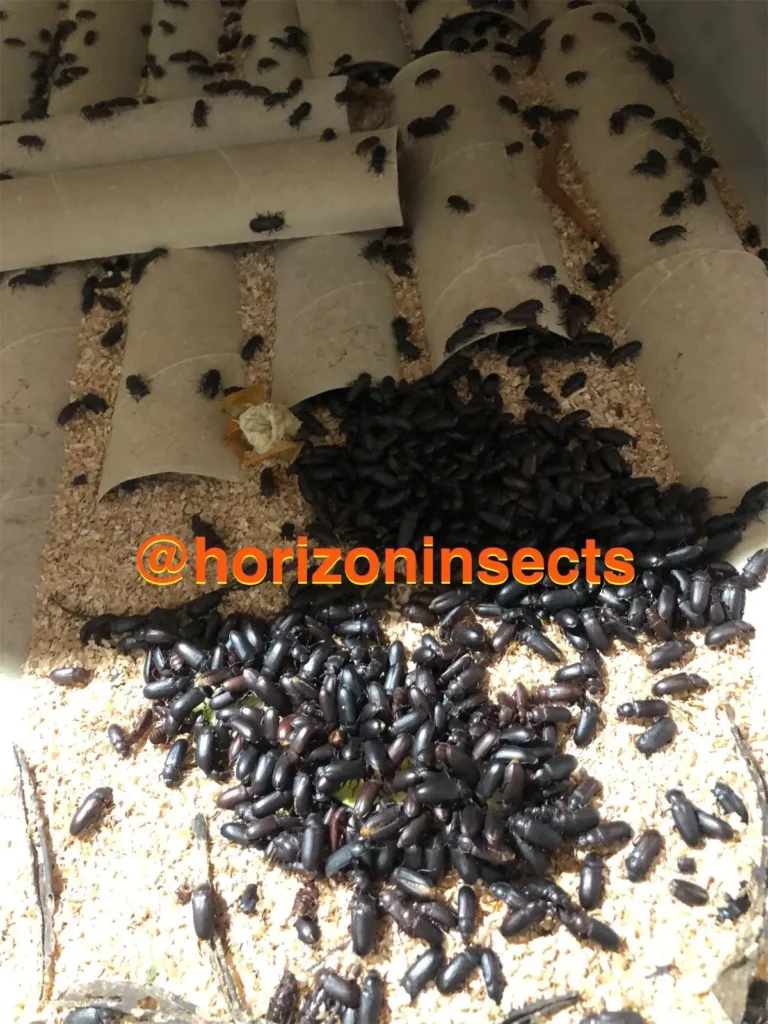
Despite their name, mealworms are not actually worms — they are the larval stage of the darkling beetle (Tenebrio Molitor). These small, golden-brown creatures might look like worms, but they belong to the insect family and go through a complete metamorphosis: egg, larva (mealworm), pupa, and adult beetle. So, If you think you’ve eaten a worm… don’t worry — you haven’t!
Edible mealworms Nutritional Information (Per 100g)
| Category | Nutrient/Parameter | Value |
|---|---|---|
| Carbohydrates & Energy | Energy value (kcal) | 503 kcal/100 g |
| Energy value (kJ) | 2106 kJ/100 g | |
| Total carbohydrates | 6.7 g/100 g | |
| Carbohydrates (available) | 6.7 g/100 g | |
| Fat (Acid Hydrolysis) | Fat (after acid hydrolysis) | 27.0 (± 1.0) g/100 g |
| Sugar Profile | Glucose | < 0.2 g/100 g |
| Fructose | < 0.2 g/100 g | |
| Sucrose | < 0.2 g/100 g | |
| Lactose | < 0.2 g/100 g | |
| Maltose | < 0.2 g/100 g | |
| Sum of reducing sugars | < 0.2 g/100 g | |
| Sum of sugars (mono and disaccharides) | < 0.2 g/100 g | |
| Minerals – Oligoelements | Phosphorus | 3200 (± 469) mg/kg |
| Calcium (Ca) | 210 (± 36) mg/kg | |
| Magnesium (Mg) | 1200 (± 184) mg/kg | |
| Copper (Cu) | 9.0 (± 2.5) mg/kg | |
| Selenium (Se) | 0.24 (± 0.08) mg/kg | |
| Potassium (K) | 3300 (± 563) mg/kg | |
| Zinc (Zn) | 47 (± 24) mg/kg | |
| Iron (Fe) | 19 (± 7) mg/kg | |
| Manganese (Mn) | 4.1 (± 1.0) mg/kg | |
| Molybdenum (Mo) | 0.38 (± 0.11) mg/kg | |
| Boron (B) | 1.3 (± 0.4) mg/kg | |
| Total Dietary Fiber | Fiber content | 4.9 (± 1.5) g/100 g |
| Proteins | Total Nitrogen | 9.35 (± 0.24) g/100 g |
| Proteins (Nx6.25) (Kjeldahl) | 58.4 (± 1.5) g/100 g | |
| Moisture | Moisture (at 102-103°C) | 3.2 (± 0.5) g/100 g |
| Amino Acids | Hydroxyproline | < 0.2 (LOQ) g/100 g |
| Ornithine | 0.122 (± 0.024) g/100 g | |
| Threonine | 1.97 (± 0.28) g/100 g | |
| Aspartic acid | 4.15 (± 0.58) g/100 g | |
| Serine | 2.27 (± 0.32) g/100 g | |
| Lysine | 2.88 (± 0.40) g/100 g | |
| Valine | 3.12 (± 0.44) g/100 g | |
| Proline | 3.11 (± 0.44) g/100 g | |
| Alanine | 3.60 (± 0.50) g/100 g | |
| Phenylalanine | 1.82 (± 0.25) g/100 g | |
| Isoleucine | 2.14 (± 0.30) g/100 g | |
| Glycine | 2.60 (± 0.36) g/100 g | |
| Tyrosine | 3.32 (± 0.46) g/100 g | |
| Arginine | 2.64 (± 0.37) g/100 g | |
| Leucine | 3.70 (± 0.52) g/100 g | |
| Histidine | 1.53 (± 0.21) g/100 g | |
| Glutamic acid | 5.41 (± 0.76) g/100 g |
Mealworms for humans are a healthy, eco-friendly protein source that doesn’t compromise on taste. You can eat mealworms which have been specifically raised for human consumption and the flavour might just surprise you. They are nutritious, sustainable and surprisingly nutty. Packed with protein, fibre, and essential vitamins, mealworms offer a crunchy texture and a mild, nutty flavour. These versatile insects are not only good for you — they’re also good for the planet.
Why Are Edible Insects Considered Healthy and Sustainable?
Edible insects are considered healthy and sustainable because they offer high nutritional value while having a much lower environmental impact than traditional animal protein.
From a health perspective, insects such as crickets and mealworms are rich in protein, typically providing around 50–60% protein by dry weight. They also contain essential micronutrients, including iron, zinc, B-vitamins, and healthy fats. In addition, insects contain chitin, a natural fibre that supports gut health, making them a low-calorie, nutrient-dense food option.
From a sustainability standpoint, insect farming is far more efficient than conventional livestock production. Insects require significantly less land, water, and feed to produce the same amount of protein. They also generate far fewer greenhouse gas emissions compared to beef or pork. Because insects convert feed into protein very efficiently, they offer a scalable and environmentally friendly solution to meeting global protein demand.
Together, these edible insects benefits make edible insects a healthy, eco-friendly choice for consumers looking for sustainable food alternatives. In the UK, edible insects are regulated by the Food Standards Agency (FSA) as novel foods, ensuring that only approved species meeting strict safety standards can be sold for human consumption.
If you’d like to try them yourself, you can explore our edible insect products — including crickets, mealworms, and mixed insect snacks.
Edible insects benefits and sustainability summary
- High protein: 50–60% of dry weight for mealworms and crickets.
- Micronutrients: Iron, zinc, B-vitamins, and healthy fats.
- Low-calorie, high-fibre option: Chitin in insects supports gut health.
- Lower environmental impact: Insects require far less land, water, and feed than traditional livestock.
- Reduced greenhouse gases: Farming insects produces far fewer emissions than beef or pork.
- Efficient protein source: Converting feed into protein is much faster and more efficient.
In short, eating insects is a healthy and eco-friendly choice for conscious consumers. The Food Standards Agency (FSA) regulates edible insects as novel foods, meaning only species that meet safety standards can be sold for eating.
Edible insects are gaining popularity for two main reasons: health and sustainability.
Crickets vs. Mealworms vs Locusts: Which is better?
Different edible insects have different textures and flavours. Here’s a quick guide:
| Insect | Taste Profile | Uses |
|---|---|---|
| Mealworms | Mild, nutty, slightly earthy | Stir-fries, roasted snacks, protein bars |
| Crickets | Crunchy, slightly nutty, neutral | Baking, protein powders, granola, snacks |
| Locusts | Savoury, slightly meaty | Roasted, spiced, Asian-style recipes |
What do edible crickets taste like?
Edible crickets for humans have a mild, nutty umami flavour with a light crunch, often compared to roasted sunflower seeds or dried bacon. Hence, if you’re trying a cricket for the first time, the flavour is likely more familiar than you’d expect. Their subtle taste makes them a versatile ingredient for snacking straight out of the bag or adding protein to more traditional dishes.
The flavour profile of edible crickets
- Primary Taste: A mild, savory nuttiness. Many compare it specifically to roasted almonds or walnuts.
- The "Umami" Factor: There is a subtle, deep savoriness similar to mushrooms or even popcorn.
- The Aftertaste: Some varieties carry a very faint hint of raw shrimp or crab, which makes sense given that crickets and crustaceans are biological "cousins."
Texture and preparation
The taste is heavily influenced by how they are prepared:
- Roasted/Fried: This is the most common way to eat them. They become incredibly light and crunchy, similar to the texture of a hollow pretzel or the skin of a roasted peanut.
- Cricket Flour (Powder): When ground into a fine powder, the flavour is very mild. It adds a "malty" or whole-wheat depth to smoothies, protein bars, and baked goods without being overpowering.
- Seasoned: Because crickets are mild, they act like a "flavour sponge." They are excellent at taking on the taste of lime, chili, salt, or garlic.
Fun Fact: Because edible bugs are high in protein and healthy fats, their flavour is often described as "cleaner" and less oily than traditional snack foods like potato chips.
What do edible mealworms taste like?
If you are curious about edible mealworms, you’ll find that their flavour profile is quite similar to crickets but with a slightly sweeter, milder finish. As the larvae of the mealworm beetle, they have a "cleaner" taste that many beginners find even more approachable than other insects.
The flavour profile of edible mealworms
Mealworms are best known for their toasted, cereal-like flavour. While they share the "nutty" label with crickets, the specific notes are often compared to:
- Roasted Grains: A taste similar to puffed rice, toasted oats, or malt.
- Seeds: Many detect the oily, savory richness of roasted sunflower seeds or pumpkin seeds.
- Sweet Corn: In their raw or steamed state, they have a surprisingly sweet aroma reminiscent of fresh corn.
- Mild Umami: They offer a subtle savory depth that is less "intense" than the mushroom-like flavour of a grasshopper or cricket.
Texture and mouthfeel
Because mealworms are larvae, their structure is different from the "leggy" crunch of a cricket:
- "Snap" and Pop: When roasted, they have a thin, crispy outer shell that "snaps" easily, with a light, airy center—very similar to a Rice Krispie.
- Smoothness: They lack the larger wings or legs that can feel "scratchy" to some eaters, making them easier to incorporate into familiar foods like salads or cookies.
How Preparation Changes the Taste
Mealworms are exceptionally "taste-malleable," meaning they easily adopt the flavours of the ingredients they are cooked with.
| Preparation | Resulting Flavour | Best Comparison |
| Boiled/Steamed | Sweet, slightly vegetal, and soft. | Sweet corn or boiled edamame. |
| Dry Roasted | High nuttiness with a toasted finish. | Sunflower seeds or toasted walnuts. |
| Deep Fried | Rich, savory, and very crispy. | Prawn crackers or crispy potato skins. |
| With Sugar/Butter | Develops "meat-like" savory notes. | Savory bacon or a nutty shortbread. |
Pro Tip: Scientists have found that when mealworms are heated with sugar (a Maillard reaction), they develop a savory, "meat-like" aroma that can be used to create sustainable seasonings.
What do edible locusts taste like?
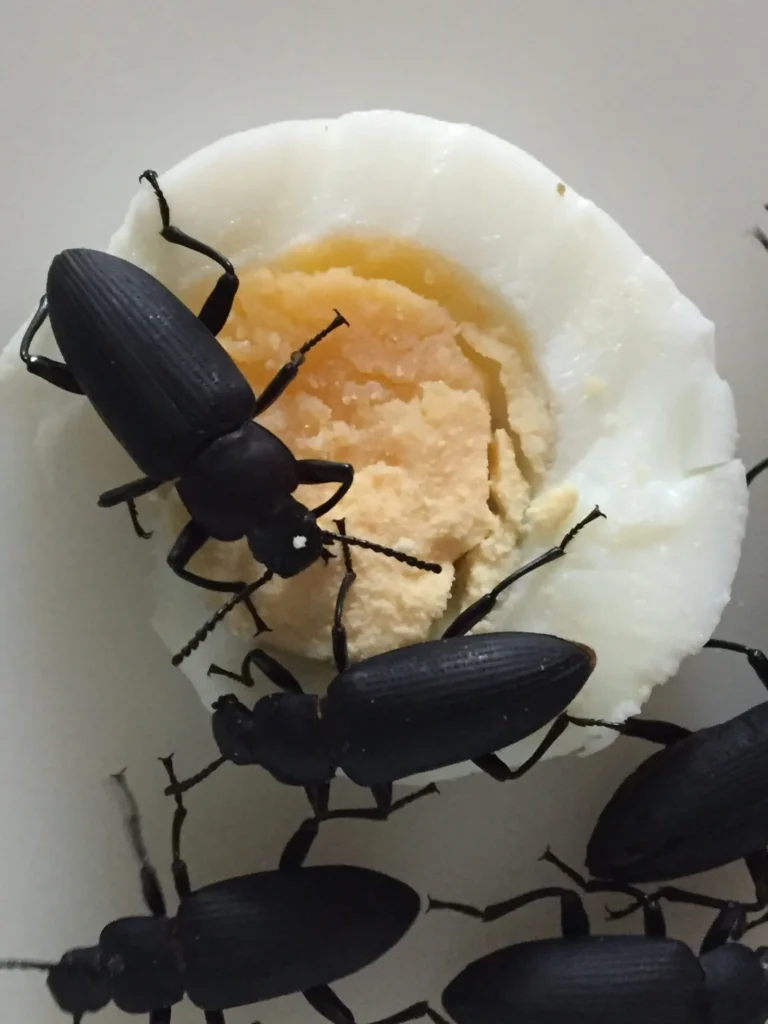
If you’re ready to move beyond crickets and mealworms, locusts are often considered the "gourmet" choice of the insect world. Because they are larger and have a higher muscle-to-shell ratio, they offer a meatier experience that has earned them the nickname "sky prawns." Here is what edible locusts taste like.
The flavour profile of edible locusts
Locusts have a more robust and complex flavour than their smaller relatives. While still "nutty," they lean further into savory and seafood-like territory:
- "Sky Prawns": Because they are closely related to crustaceans, roasted locusts have a sweet, briny flavour very similar to fried shrimp or crab meat.
- Smoky Bacon: When deep-fried or heavily roasted, they develop a rich, fatty savoriness that many compare to smoked bacon or pancetta.
- Toasted Grains & Hay: There is a distinct "green" or grassy undertone—reminiscent of dried hay or toasted barley—which reflects their herbivorous diet.
- Mild Bitterness: Unseasoned locusts can have a very slight, pleasant bitterness on the finish, similar to dark chocolate or hoppy beer.
Texture and mouthfeel
The size of a locust changes the eating experience significantly:
- Fleshy and Chewy: Unlike the hollow crunch of a cricket, locusts have a "meaty" interior. They are more substantial and can be surprisingly juicy if sautéed.
- The "Shell" Crunch: Their exoskeleton is thicker, providing a satisfying "snap" like the shell of a well-cooked shrimp.
- Fibrous: They are more fibrous than mealworms, which can result in a slightly "gummy" or concentrated texture as you chew.
How preparation changes the taste
Locusts are large enough to be the star of a dish rather than just a garnish. Their flavour shifts dramatically depending on the heat source.
| Preparation | Resulting Flavour | Best Comparison |
| Boiled/Steamed | Very mild, sweet, and slightly oceanic. | Steamed shrimp or lobster tail. |
| Pan-Fried (Butter) | Rich, nutty, and savory; the "bacon" notes emerge. | Crispy bacon or sautéed mushrooms. |
| Deep-Fried | Highly savory and intensely crunchy. | Prawn crackers or crispy chicken skin. |
| Smoked/Dried | Deeply earthy and woody. | Smoked jerky or dried porcini mushrooms. |
Chef's Tip: It is common practice to remove the wings and large jumping legs before eating, as they can be sharp and don't carry much flavour. This leaves you with the "meaty" torso and head.
How do you cook edible insects?
Edible insects are versatile in the kitchen. For example:
- Roasting: Preheat oven to 160°C and roast for 10–15 mins. Perfect for snacks.
- Pan-frying: Lightly fry with oil, herbs, or spices for crunchy toppings.
- Boiling / blanching: Often used for mealworms before adding to stir-fries.
- Baking into foods: Cricket or mealworm flour can be added to bread, cookies, or protein bars.
- Grinding into powder: Makes it easy to add protein to smoothies, pancakes, or energy balls.
Always follow product instructions for the best results. We also recommend you check our edible insect recipes page for detailed recipes or alternatively the "edible insects how to" page for simpler serving suggestions on how to incorporate edible bugs in your everyday cooking and snacking. If you are near us in London you can join one of our London-based edible insect cookery classes to learn hands-on how to prepare insects in a fun, guided session.
Beginner-friendly ways to try insects
For first-timers, these approaches make eating insects simple and fun:
- Start small: Try roasted mealworms as a crunchy snack.
- Add to familiar foods: Sprinkle crickets or mealworms on granola, yogurt, or salads.
- Use insect flour: Blend into pancakes, cookies, or protein shakes.
- Recipes: Try recipes like “Mealworm Stir-Fry” or “Cricket Granola Bars” to gradually incorporate insects.
Fun fact: Many people enjoy insects more when combined with spices or chocolate, as it enhances flavour and masks any “earthy” taste.
If you have not tried edible insects before, you can also consult our Best insects to eat for beginners guide.
Where to buy edible insects in the UK?
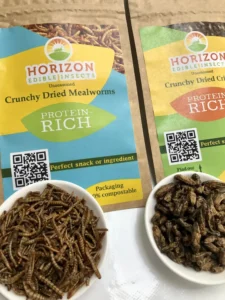
Edible insects are versatile in the kitchen. You can buy high-quality, UK-approved edible insects directly from the Horizon edible Insects shop. Our products are farmed to food-grade standards and come ready to eat or cook.
Popular products:
- Edible Mealworms
- Dried Crickets
- Dried edible insects suitable to make cricket powder
- Horizon Edible Insects budget friendly range
We ship across the UK, ensuring freshness and safe packaging for human consumption.
FAQ
Q: Can humans eat mealworms?
Yes — mealworms are safe when sourced from food-grade suppliers like Horizon Insects. They are nutritious and can be eaten roasted, fried, or blended into recipes.
Q: Are edible insects safe?
Yes, if they are FSA-approved species and processed correctly. Avoid wild or pet-feed insects.
Q: Do insects taste good?
Most edible insects are mild, nutty, or slightly earthy. Mealworms and crickets are beginner-friendly and can be added to snacks, baking, or main dishes.
Q: Can I use insects in recipes?
Absolutely! Mealworms, crickets, and locusts can be roasted, baked, pan-fried, or ground into flour for smoothies, bars, and baked goods.
Q: Are insects nutritious?
Yes — they are high in protein, vitamins, minerals, healthy fats, and fibre. They are also more sustainable than traditional meat.
If you could not find what you were looking for in this edible insects guide, you can also find additional information in our comprehensive list of Frequently Asked Questions, in the FAQ page.
References & Sources:
[1] UN Food and Agriculture Organization (FAO): Water Scarcity and Sustainability Report
[2] Food Standards Agency (FSA): Edible Insects Novel Food Regulations